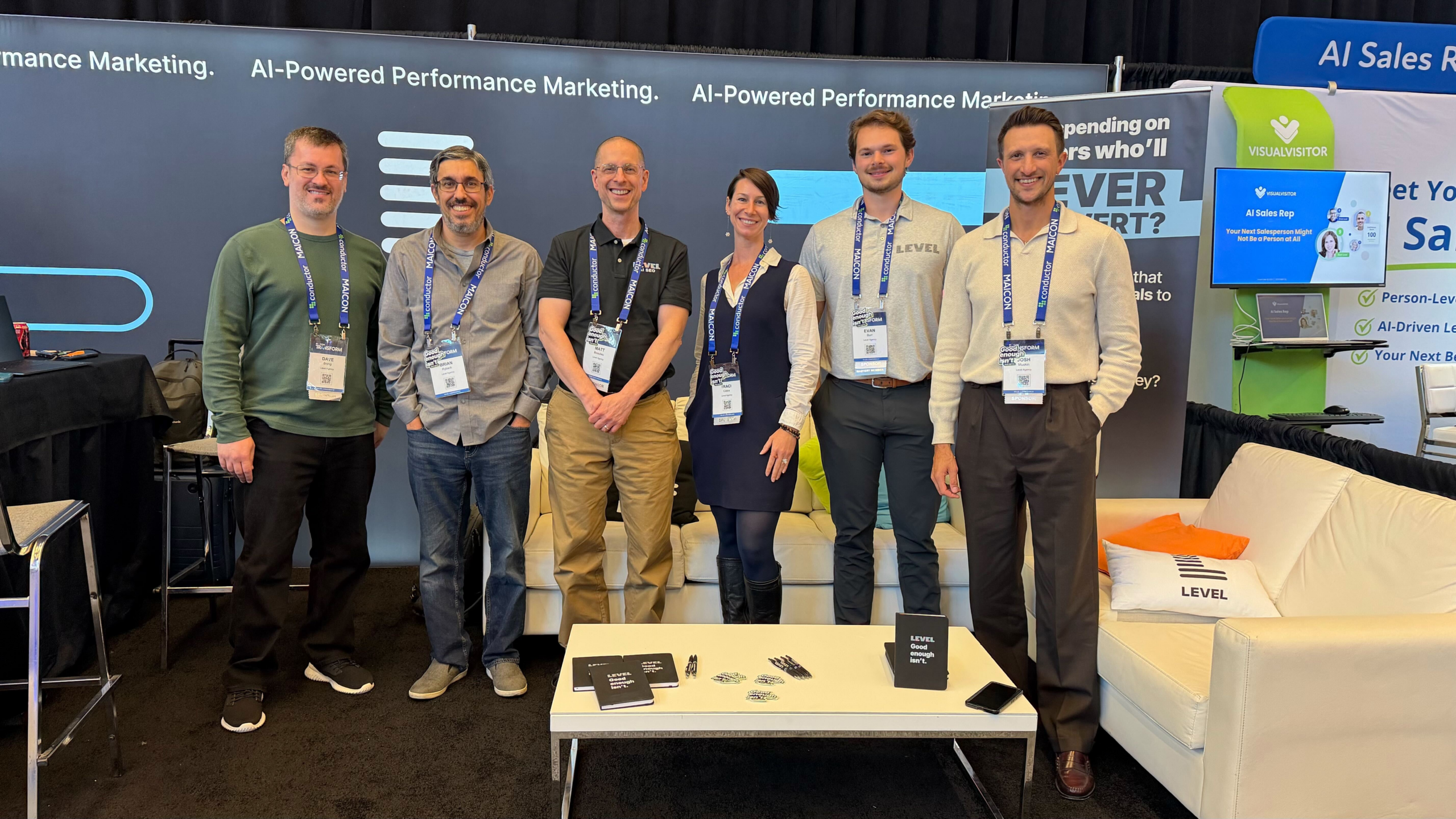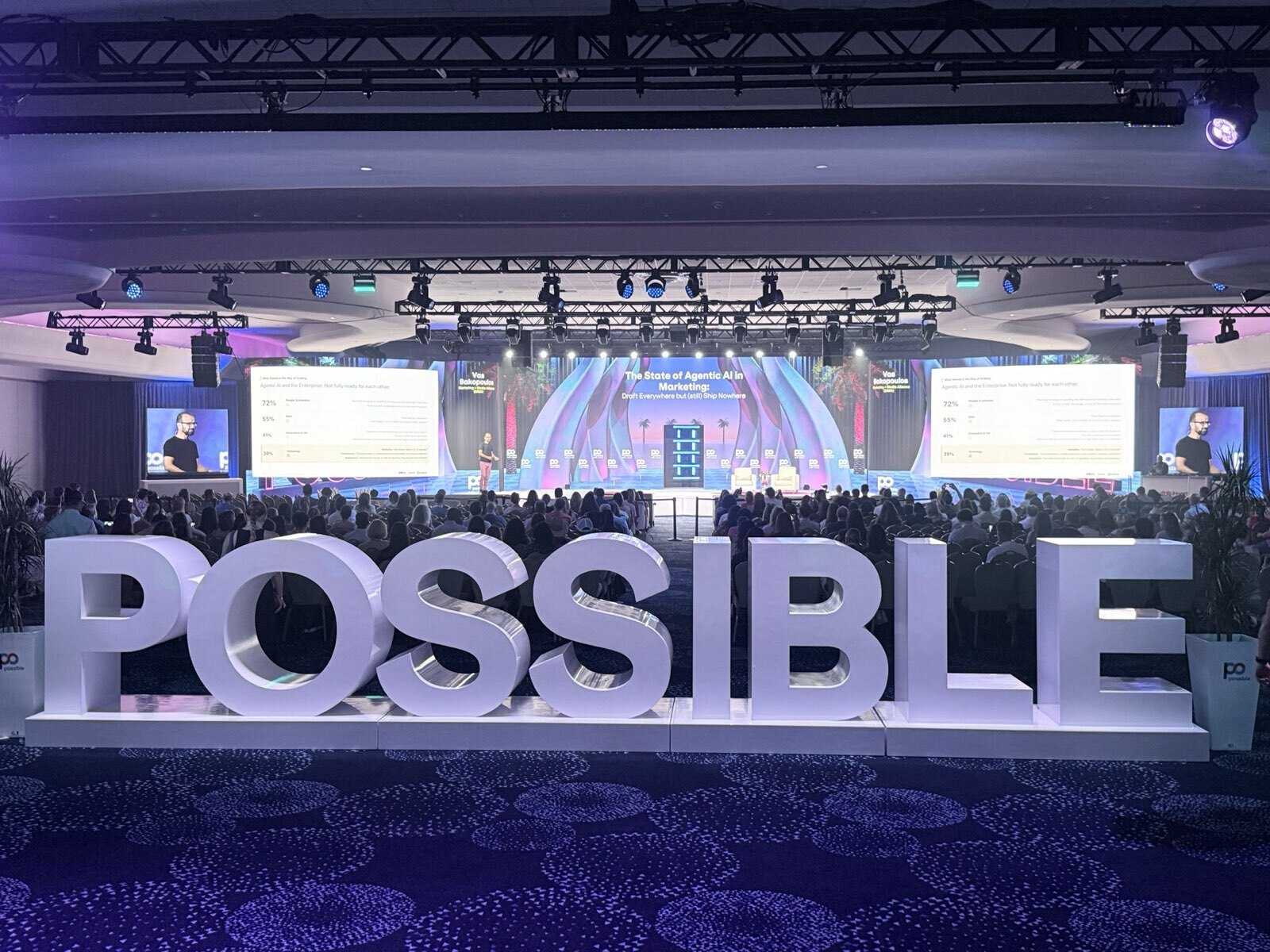
Last week I was fortunate to attend the POSSIBLE 2026 conference for the second time in 3years. I had heard a lot of buzz leading up to the event so I was not all that surprised to learn that the conference was roughly three times the size it was two years ago with more than 7,500 attendees at the Fontainebleau and Eden Roc in Miami Beach. That growth alone tells you something about where the industry’s attention is right now. Marketers are seeking ideas and validation on how to connect with customers, how to leverage AI effectively, and how to drive growth for their organizations.
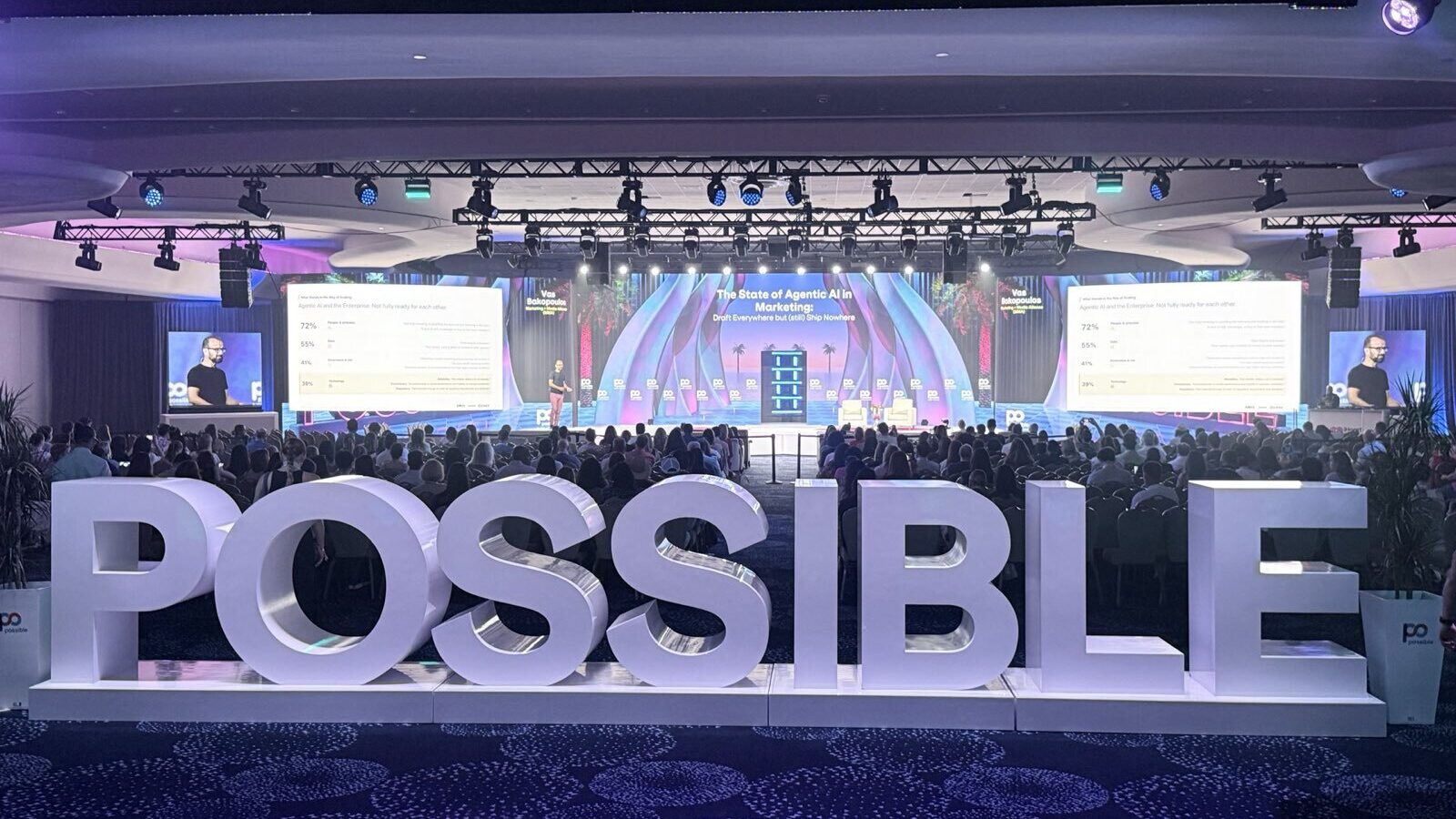
After spending three-days in conversations with current clients, partners, and industry peers I don’t see often enough, one key theme kept emerging. Across keynotes, sessions, and dinner tables the conversation wasn’t about better ads. It was about whether ads, as we’ve known them, still work.
Visit our full POSSIBLE 2026 reflections experience to dive deeper.
The funnel is compressing
One statistic from a main stage keynote stuck with me. At a major retailer, 85% of media investment now sits in shopper media. That’s not a budget allocation story. That’s consumer behavior, fundamentally changed.
Upper-funnel and lower-funnel used to be separate budget conversations. For brands operating at scale, they’re converging into a single question: where does the consumer actually make the decision? The brands that figure that out first have a real advantage. The ones still running awareness and conversion as separate programs are already behind.
Agents don’t click
One of the most interesting threads to me at POSSIBLE 2026 wasn’t a platform announcement. It was a math problem.
Cloudflare sits behind roughly 20% of all internet traffic, and 80% of leading AI companies are Cloudflare customers. Their data on the crawl-to-click ratio was blunt:
- Ten years ago, Google crawled 2 pages for every visitor it sent back to a site. A fair trade.
- Today that ratio is 18:1 for Google, driven by AI Overviews surfacing answers without a click.
- OpenAI crawls approximately 1,500 pages per visitor returned. Some platforms hit 500,000:1 by the end of 2025.
- 75% of searches now end without a single click.
The IAB is already building a framework for agent commerce attribution because current models can’t account for discovery that happens inside an LLM. When the trade body has to build new infrastructure, it signals the old model is fractured.
I’ve been in enough rooms where people debate whether AI search is “really” affecting performance yet. Those debates are over. The question is what you’re going to do about it.
Brand signals, not brand stories
The brand conversation at POSSIBLE 2026 was more applied than I usually hear. The focus was on infrastructure and signals, not creative awards or emotional resonance.
In an agentic world, brand signals need to be verifiable. A human consumer might visit five sites before buying. An AI agent acting on that consumer’s behalf might evaluate thousands of signals in seconds, and it doesn’t respond to homepage design, brand story, or banner advertising. Agents don’t notice branding. They assess signals and return conclusions.
The brands that hold up in that environment are the ones with consistent, trustworthy signals across every surface an LLM might be reading. That’s a fundamentally different infrastructure problem, and brands are at very different stages of solving for it.
Creator is a channel now
The Creator Economy Academy was new this year. It wasn’t an accident. Creator-led content is outperforming traditional formats in verticals that would have scoffed at the idea two years ago like financial services, healthcare, home goods. Creator-led spots are running on connected TV and converting.
The question most brands are stuck on isn’t whether to invest in creators. It’s whether they have the measurement infrastructure to prove it’s working and the operational model to scale past a handful of one-off deals. Those are solvable problems. Most brands just haven’t solved them yet.
What I brought back from POSSIBLE 2026
Three days at POSSIBLE reinforced what I hear from brand marketers constantly. The core questions are the same ones they’ve always had: how do you drive growth, how do you stay ahead of where consumers are going, how do you build for where media and technology are actually heading. What’s shifted is how fast the ground is moving under those questions.
The brands doing the best work on this aren’t waiting for the picture to get clearer.
That window is open now. It won’t stay open indefinitely.
If any of this maps to conversations you’re having internally, I’m happy to compare notes. Reach out directly or connect with our team.