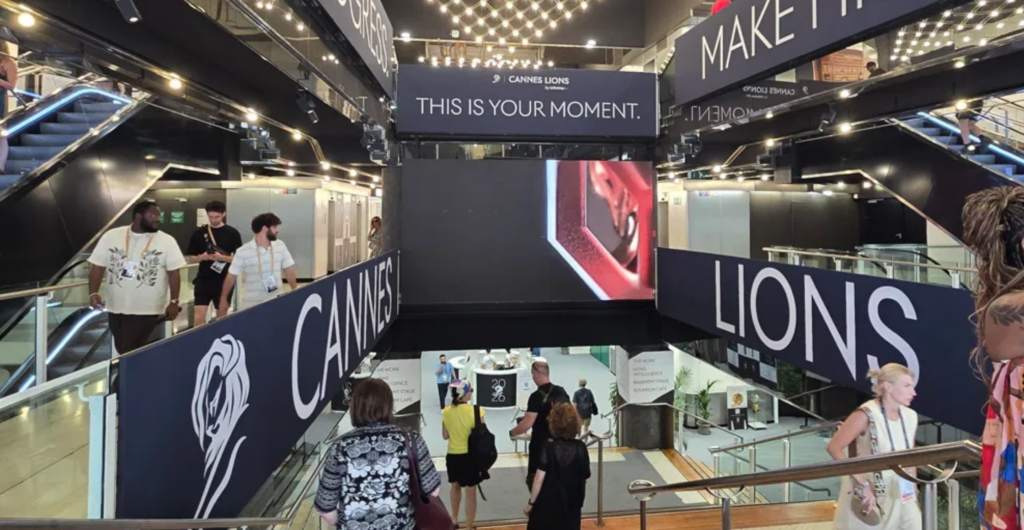
Most people who go to Cannes Lions do not realize it is built as a creative awards festival in the first place. They are there for the beach clubs, the panels, the parties, and they never clock that underneath all of it a jury is handing out actual trophies for actual creative work. That disconnect says something about where the industry actually stands.
Media people fill the Croisette all week without setting foot near the awards, and plenty of creative people sit in the Palais without touching the platform conversations happening two blocks away.
Those two things need to run together.
Most of the AI and ad tech on display this year is built for the media side, buying, targeting, optimization, and none of it means much if it stays walled off from the creative decisions upstream. The work that wins the awards and the platform relationships that get it in front of people are the same conversation now, whether the industry treats them that way or not.
If you are a marketing leader trying to read where this industry is actually heading, few other weeks on the calendar pack in this much.
There is no shortage of vendors and activations, and plenty of them are pitching a genuinely good idea. The hard part is not spotting a good pitch, it is the work after Cannes: validating whether the idea actually holds up once you dig into it. Here is what held up once I did that work.
What the Cannes Lions 2026 Grand Prix winners got right
Inside the Palais, I sat in on a jury debrief where two judges disagreed on how great work actually gets made. One argued you start from the award criteria. Study what the jury rewards, build the campaign backward from there. The other cut him off. Wrong place to start, he said. Start with the customer. Build something that genuinely matters to a real person, and the results follow. The awards find the work on their own.
This year’s Grand Prix winners settled that argument, and the second judge won.
AXA France: Three Words
AXA added three words to its standard home insurance contract: “and domestic violence.” That change applied retroactively across all 2.5 million AXA home contracts in France. It gave domestic violence victims immediate access to emergency relocation, legal support, and psychological assistance, using the same claims infrastructure AXA already ran for fire and flood.
The response was immediate.
AXA France // Three Words
Website traffic, first month
New contracts, six months
Brand consideration
vs 43% industry norm
Consideration rank
The campaign took the Creative Effectiveness Grand Prix. AXA already had the capability sitting there. They just pointed three words at a different group of people who needed it.
Heineken: The Pub That Refused to Die
When the last pub in a small Irish village was about to close for good, twenty-six residents pooled €300,000 to buy it themselves. Heineken stepped in with training, operational support, and resources to keep it running, then documented the story and built an online hub for other communities facing the same problem. The campaign won the Creative Strategy Grand Prix, and it has since helped four more Irish communities buy their own local pubs.
Heineken sells beer in pubs. That is not a complicated insight. What earned the Grand Prix was that Heineken made the outcome possible and then got out of the way and let the community tell the story in its own words.
Both campaigns started with a real human problem, solved it using something the brand already had sitting on the shelf, and produced results strong enough to survive the tougher integrity standards the festival brought in this year. Same lesson both times, straight from that jury debrief. Start with the customer, and the effectiveness takes care of itself.
Why customer relationships outweighed the technology on display
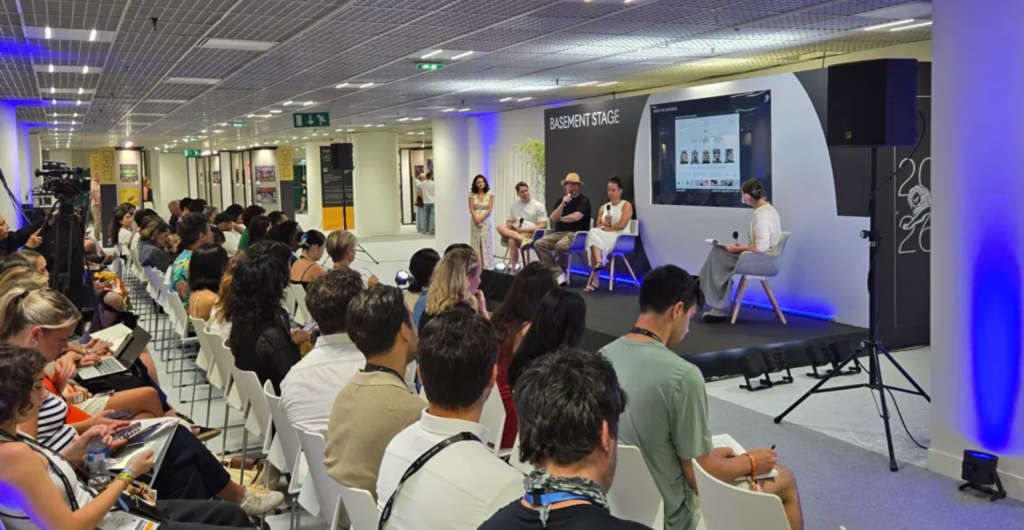
For all the AI and ad tech on display up and down the Croisette, the theme that kept surfacing was human connection. I heard it most clearly at a Female Quotient panel on shopper loyalty. It was framed as a retail conversation, but it applies to any brand serious about the relationship it has with its customers. Target, Instacart, and Bolt were all on that stage.
Target calls its shoppers "guests" and its employees "team members," language they built with Disney. That is not a branding exercise. It is an operating philosophy that changes how every person in the company behaves the second a customer is standing in front of them. AXA hit first place in consideration through the same mechanism. They treated the people they served differently, and the numbers followed the behavior.
Instacart's cart assistant makes the same point on a smaller scale. Ask it how to get more protein into your teenager's diet, and it points you to protein waffles. Their CMO framed the goal as technology that carries the weight of the customer's intent for them. That is meeting people where they are and solving the problem they actually have, not the one you assumed they had.
Bolt gave me the line that has stuck with me longest. Consumers shopping with AI have gotten hyper-specific. Nobody searches for "bananas" anymore. They search for "ripe bananas to make banana bread." The bar for staying relevant has moved with them, and a brand still calibrated to the old, broad search query is answering a question its customers stopped asking a while ago. Winning consideration now means treating customers as people working through real situations. That is marketing work, and it comes well before any technology decision.
How creator marketing moved into the media budget
Creators were not new at Cannes this year. The line between celebrity and creator has been blurry for a couple decades now. What is shifting is how much real estate and budget creators are commanding. UTA threw a dedicated creator event, Sport Beach put influencers on panels next to CMOs, and the creator economy is claiming more of the agenda, and more of the media budget, every year.
The celebrities were still everywhere, same as always. Oprah held court at the Carlton, Alan Cumming sat on a panel, Draymond Green, David Ortiz, and Janelle Monáe all made appearances, Malcolm Gladwell spoke, and Mumford & Sons, Flavor Flav, and John Summit all performed across the week. What is different is not celebrity versus creator. That distinction stopped meaning much a long time ago. What is different is how much of the conversation, and the spend, is now built around the creator side of it.
Unilever made the structural case in plain numbers.
Unilever // Creator roster
From 10,000 creators to nearly 300,000 in two years.
Unilever's position: creators need to shape the work from the start, not amplify a finished idea.
Unilever's argument is that creators need to be in the room while the idea is still forming, not brought in after the fact to execute someone else's concept. As proof, they pointed to a campaign the creators initially rejected. The agency rewrote it in collaboration with them, and it went on to earn nine Cannes Lions shortlists.
The money is chasing creators for a reason that goes deeper than fashion. Traditional publishers are losing organic reach to AI-generated answers, and the audience that used to arrive through search and editorial referrals has shifted to the people it already follows and trusts. Brands building real creator relationships now, before the market fully prices in what those relationships are worth, get an advantage that is genuinely hard to buy back once everyone else catches on.
Agentic AI media buying is past the proof-of-concept stage
The proof-of-concept phase for agentic AI in media buying is over. Most platform meetings we took made that clear. Nobody was still arguing the technology works. That argument is done. The conversation has moved to execution, cost structure, and what clients are actually seeing in live campaigns.
The vendor footprint at Cannes is enormous, and dozens of companies are making adjacent claims about what their technology delivers. Sorting real capability from confident marketing takes either deep technical fluency or a partner who has already done that homework for you.
We've been among the first independent agencies to run PubMatic's agentic buying platform in live campaigns, and the client results have been measurable:
- Campaigns launched faster
- Retargeting lists populated faster
- CTV strategies that were not previously practical became operational
- Performance improved
Patrick Van Gorder, our head of partnerships, took the stage at PubMatic's Untapped Growth event to walk through exactly what that early deployment has produced.
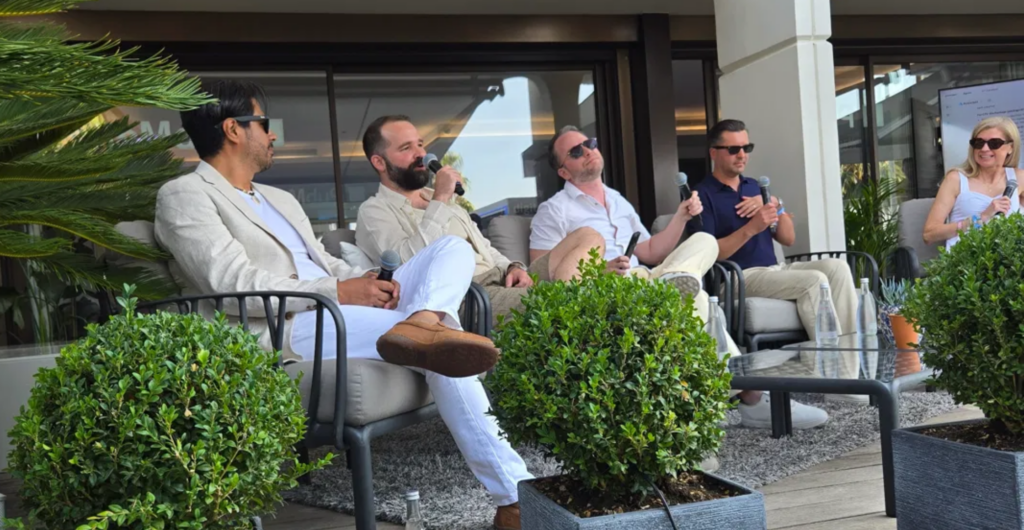
The real edge comes from running platform infrastructure and agency judgment together as one capability. Judgment puts the platform's access, betas, and roadmap conversations to work on a specific client's growth, and the platform gives that judgment room to operate at a scale no single team could reach on its own.
The agencies getting this right have studied the landscape, committed to a connected set of partners, and built the expertise to deploy those partners in ways a client cannot easily replicate internally.
Ranking as a top partner opens the door to betas, roadmap input, and early capabilities before the general market ever sees them, and that head start compounds with every cycle. Earning it is one of the concrete reasons I send the right people to Cannes every year.
The part that never makes the Cannes agenda
The most valuable thing about Cannes never shows up on a schedule. Meetings happen quickly because everyone is in the same city, and partners who normally sit behind layers of account management become directly accessible in a way they usually only are at the very start of a relationship.
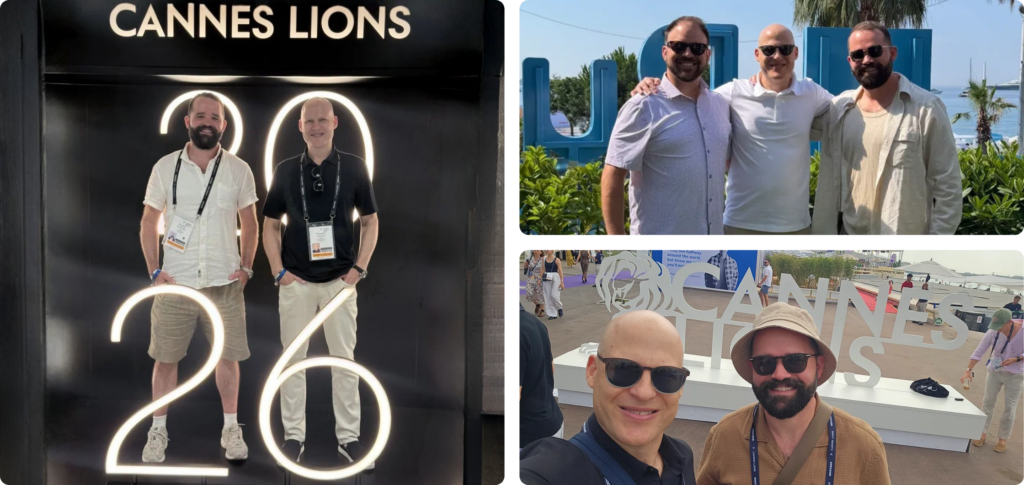
I plan a packed agenda going in, with a defined set of relationships to advance and decisions I need to move forward. That planning lets you compress months of conversations into five days. But some of the best interactions I have had at Cannes were not on that agenda at all. They happened in a hallway, in line for coffee (or the bar), at a dinner I almost skipped, because the right person happened to be standing next to me. Plan the week with intent, and still leave room for what you did not plan for. Both are where the value comes from.
Three marketing moves to make after Cannes Lions 2026
Three moves are worth making while the Cannes conversation is still fresh.
| The move | Why it matters now |
|---|---|
| Connect creative to performance | The work that won produced verifiable business results |
| Treat creators as a media strategy | The audience migration is structural and still accelerating |
| Build depth with platform partners | Deep partner relationships compound with every cycle |
1. Connect creative to performance objectives explicitly.
The work that won this year produced verifiable business results because it started from a real human insight and built something concrete around it. Write your creative brief so it names the performance goals it serves and the customer insight it starts from, in the same document. Creative built that way performs in market, and the recognition tends to follow the performance.
2. Take the creator conversation seriously as a media strategy.
Creator media is not new, but it is pulling more budget and more attention every cycle. Move creator work off the tactical line item and into your media plan as a channel with its own budget, targets, and roster. Brands that build those relationships now lock in reach at today's prices and hold relationships that compound for years, ahead of a market that will keep bidding the same access up.
3. Judge platform technology by what it delivers, not by the pitch.
Every platform at Cannes is pitching some version of agentic AI right now, and most of it sounds the same from the stage. What matters is what happens after you turn it on. With PubMatic, that showed up as faster campaign launches, faster retargeting builds, CTV strategies that finally became operational, and better performance, not as a slide about the technology itself. Judge any platform relationship on results like that, not on how well they can talk about the tech.
The bottom line
The brands that act on this will pull ahead this year.
Everything I saw this year rewarded brands that started with a real customer problem and built something verifiable around it, whether that showed up in the winning creative, the customer-loyalty conversations, the creator economy, or the platform meetings. The brands that move on what Cannes 2026 put on the table will head into 2027 with real momentum, carrying work that performs and relationships that compound. Act now while the conversation is top-of-mind and the relationships are still warm.
We went, we sat in the rooms where the decisions get made, and I came back with a clearer picture of where this industry is heading and what our clients should do about it.
Good enough isn't.
Let's talk about where your brand is headed.
No pitch. If you want to think through what any of this means for your marketing in the second half of 2026, I am glad to have that conversation.
Howard Diamond, Chief Revenue Officer
hdiamond@level.agency