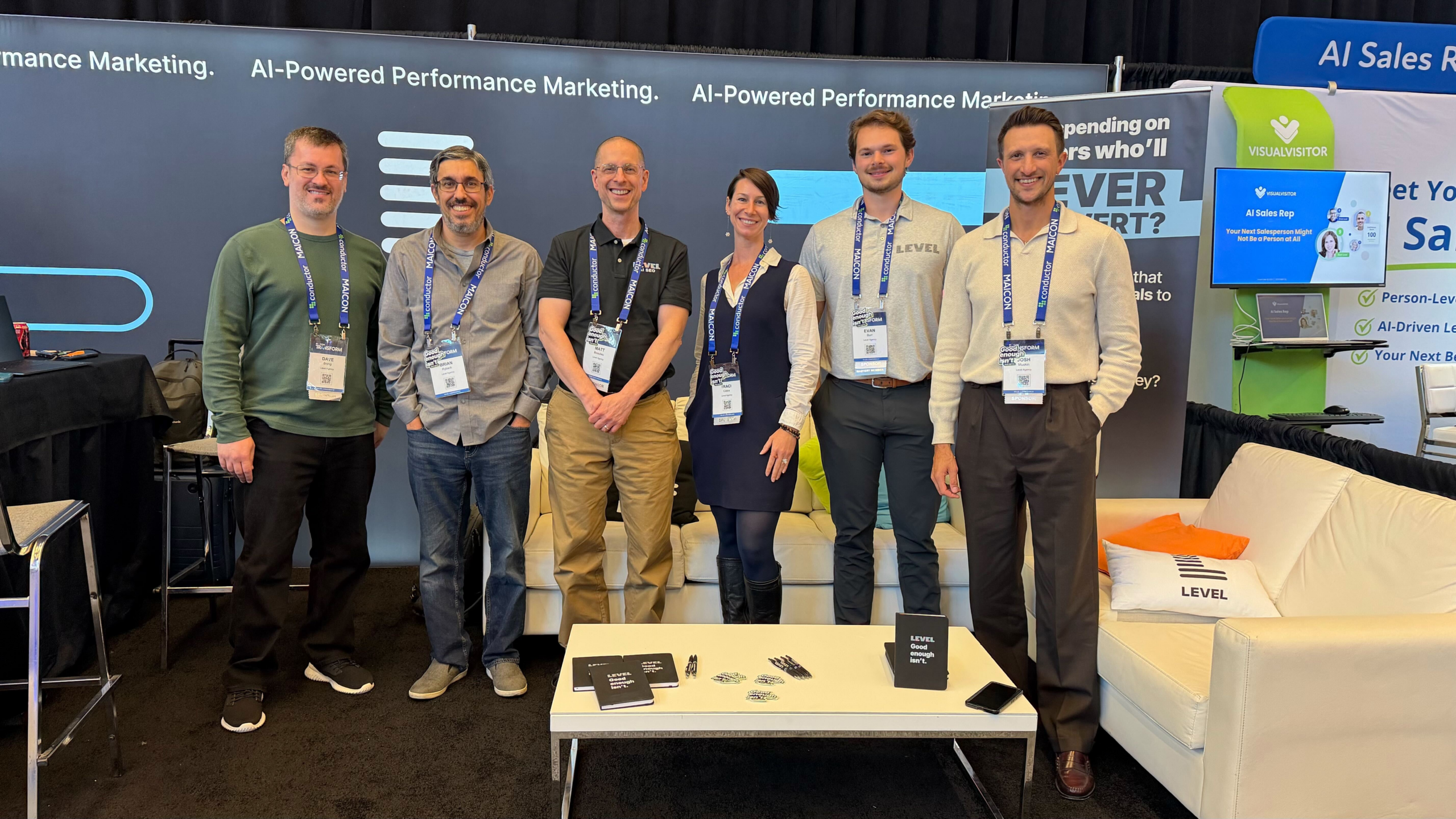
We just returned from the Career Education Colleges and Universities (CECU) 2026 Career Education Convention in Cleveland, where conversations on the exhibit floor, in sessions, and over dinner kept returning to the same set of concerns: the pace of federal rulemaking, the stakes attached to program-level earnings data, and the genuine uncertainty about what any of this means for enrollment strategy in the near term.
A lot remains unsettled. But the window for preparation is closing faster than many institutions realize.
This post covers the four higher education federal regulatory changes that matter most to career schools right now, what the current state of play actually is, and where enrollment and marketing leaders should be putting their attention in the second half of 2026. We will be back at CSPEN in Austin in August and would welcome the chance to continue this conversation in person.
These regulatory changes should influence where institutions invest marketing dollars, how they position programs, and how they communicate career outcomes to a prospective student who is already running ROI comparisons before submitting an inquiry.
Executive summary
Four regulatory changes, one strategic window
- STATS earnings accountability is the most urgent. The first earnings premium calculations land in early 2027, and the first formal failure designation could follow in mid-2027. No program can lose Direct Loan eligibility before July 1, 2028 at the earliest — two failures in consecutive years are required. Replacement programs still need to be on your E-App before you stop enrolling in any at-risk program. Not after. The ineligibility window can stretch 7–10 years.
- Workforce Pell opens a new student population: adult career-changers who previously could not access federal aid for short-term credentials. The opportunity is real. The enrollment infrastructure to reach them is different from what most career schools have built.
- The OBBBA restructures student loan limits and repayment plans starting July 1, 2026. The changes hit traditional four-year institutions hardest, but career schools with graduate programming or significant Parent PLUS reliance need to model the impact now.
- AIM accreditation rulemaking is on a longer runway (2027 at earliest) but directional: the regulatory frame is moving toward outcome-based standards and more accreditor flexibility. Monitor and engage through your current accreditor.
- The market and the regulation are pointing the same direction. Our portfolio data shows programs without a clear, verifiable ROI story are already losing ground on cost per enrollment and lead-to-enrollment rate, before STATS takes effect.
What did the One Big Beautiful Bill Act actually change?
Signed into law on July 4, 2025, the One Big Beautiful Bill Act (OBBBA) restructured federal student aid in ways that will reshape both enrollment strategy and program viability across all of higher education. For career schools, the effects cut in two directions: some provisions create real opportunity, others introduce new risk.
On the loan side
- Grad PLUS loans are eliminated starting July 1, 2026
- Parent PLUS loans capped at $20,000 per year / $65,000 lifetime
- Graduate students: $20,500 annual limit / $100,000 lifetime cap
- Professional students: $50,000 annual limit / $200,000 lifetime maximum
- Part-time students face proportional reductions tied to enrollment intensity
These changes affect traditional four-year institutions more than career schools, but any school with graduate programming or significant Parent PLUS reliance needs to model the enrollment impact now.
On repayment
- Previous income-driven repayment plans consolidate into two options: a new Repayment Assistance Plan (RAP) or the existing Income-Based Repayment Plan (IBR)
- Federal student loan forgiveness becomes taxable for any debt forgiven after December 31, 2025
These shifts alter the borrowing calculus for prospective students and will surface in enrollment conversations, especially for programs where graduates carry meaningful debt.
What did not make the final bill
- Risk-sharing provisions that would have required institutions to cover a portion of Title IV funds when programs failed accountability metrics were dropped
- The Pell Grant program was fully funded rather than cut
For career schools, the version of accountability that passed is more manageable than what was originally proposed. The Department of Education released a Dear Colleague Letter on July 18, 2025, outlining immediate implementation steps. Additional rulemaking through the RISE Committee and the AHEAD Committee is still in the pipeline.
This quarter
- Model the enrollment impact of Parent PLUS and graduate loan cap changes if your school has either
- Brief enrollment counselors on the new RAP and IBR repayment options. Prospective students will ask.
- Update financial aid messaging for programs where graduates carry significant debt
What does the STATS earnings accountability rule mean for career schools?
This is the development that dominated the CECU session led by Aaron Lacey, Partner and Co-Chair of the Higher Education Practice at Thompson Coburn LLP, who served as a negotiator at the rulemaking table. His session, “ED’s New Earnings Accountability Rule: Understanding and Planning for the Future,” was one of the most practically useful sessions of the conference. His core warning: the window for strategic response is not 2027. It is now.
The Department of Education published the Notice of Proposed Rulemaking for the new Student Tuition and Transparency System and Earnings Accountability (STATS) framework on April 20, 2026. Final rules are expected to take effect July 1, 2026, and ED plans to calculate the first Earnings Premium metric in early 2027, using earnings data from students who completed their programs in 2021.
How the test works
- Undergraduate programs: median earnings of graduates must exceed median earnings of working adults ages 25–34 with only a high school diploma
- Graduate programs: the comparison group is adults 25–34 with a bachelor’s degree
- Failure threshold: two failures in any three consecutive years = “low-earning outcome program” = loss of Title IV direct loan eligibility
- The debt-to-earnings test is gone. Cost of the program has no bearing. This is purely about what graduates earn four years after completing the program
Who gets hit hardest
Department data from the negotiated rulemaking shows the highest projected failure rates in:
- Undergraduate certificate programs (highest exposure)
- Associate degree programs
- Cosmetology, massage therapy, culinary arts, and arts programs at the program-type level
The test applies equally to community colleges and public institutions. Career schools carry more exposure because their program mix concentrates in the categories with the highest projected failure rates.
The enrollment data on earnings-risk programs
We manage over $100 million in higher education media annually. Our 2026 Higher Education Benchmarks Report shows the market has already started sorting along the same lines STATS will formalize.
The programs in the earnings-risk zone under STATS (beauty, massage therapy, culinary, arts) are not broken out separately in our benchmark data, but they fall squarely within the program types showing structural deterioration: declining ROI clarity, shrinking ability to answer the “is this worth it” question that prospective students are already asking AI tools before they ever submit an inquiry.
The harder truth: if your programs are in the earnings-risk zone for STATS and your enrollment marketing is still running on CPL optimization, you are spending to fill a funnel that is going to get harder to defend, both to regulators and to increasingly informed prospective students. The regulatory pressure and the market pressure are pointing the same direction.
Investing in enrollment marketing for programs facing STATS exposure is not inherently a bad decision. It depends on the institutional plan:
- If the plan is to build a replacement program: market the current program aggressively while the replacement gets approved and establish the enrollment history for the new program
- If the plan is to teach out and close: marketing investment should taper accordingly
- What does not make sense: spending at full rate on a program with a compliance clock running while making no parallel moves on program development
How do replacement programs protect your Title IV eligibility before STATS takes effect?
Lacey’s most urgent message: the window closes the moment an institution either voluntarily discontinues a failing program or a program formally loses eligibility. Once either trigger occurs, a two-year period of ineligibility begins. It can stretch 7–10 years.
During that period, the school cannot establish eligibility for any program at the same credential level with a four-digit CIP code match and at least one overlapping Standard Occupational Classification (SOC) code. Three paths around the restriction:
- Different credential level. A failing certificate-level program does not block a new associate degree program in the same field. This is the cleanest path and works even after the first program fails.
- Different six-digit CIP code. Within a four-digit CIP family, there are often multiple six-digit codes. A program that modifies enough curriculum to justify a new six-digit classification can be established without triggering ineligibility. Lacey cited a cosmetology school that modified roughly 20% of its curriculum, secured a new six-digit CIP code, and added the program to its E-App before winding down the original. Graduates still qualify to sit for the licensure exam.
- No overlapping SOC codes. If a new program can demonstrate no occupational overlap through the CIP-SOC crosswalk, it falls outside the restriction entirely, regardless of credential level or CIP family.
The critical timing rule: replacement programs must be on the E-App and approved before the institution stops enrolling in the failing program. Lacey’s conservative read is that the period of ineligibility begins the moment enrollment stops, not at the end of a teach-out. Do not wait for the first formal determination letter.
This quarter
- Pull the Department’s published earnings data set and run your OPEID and understand which programs face material risk before the first determinations land in spring 2027
- Map any at-risk programs against the three replacement paths: different credential level, different six-digit CIP, no overlapping SOC codes
- Start accreditor and state approval conversations for replacement programs now. This process takes months, and the clock starts when you stop enrolling, not when you decide to stop
- Do not stop enrolling in any program until the replacement is on the E-App and approved
Who qualifies for Workforce Pell grants, and what does it mean for enrollment marketing?
Think about who Workforce Pell actually reaches. A 28-year-old warehouse worker who wants to become an HVAC technician. A 34-year-old parent who needs a phlebotomy credential in 10 weeks to change careers without taking on four-year-degree debt. These students existed before this rule. What changed on July 1, 2026, is that federal Pell Grant dollars can now follow them into qualifying short-term programs that have historically been inaccessible to students without the ability to pay out of pocket.
For career colleges with programs in skilled trades, allied health, and workforce-aligned certificates, Workforce Pell opens an enrollment channel with a student profile most current marketing infrastructure was not built to reach. The inquiry path, the financial aid conversation, and the decision timeline for a career-change adult learner entering a 10-week program look different from a traditional certificate enrollment. Your admissions sequences, your speed-to-lead SLA, and your program page messaging all need to reflect that.
Eligibility requirements
- Program length: at least 8 weeks and fewer than 15 weeks
- Clock hours: 150 to 599
- Institution must be Title IV-eligible and accredited
- Credential must be portable and stackable
- Program must align with high-skill, high-wage, or in-demand occupations verified by the state governor
- At least 70% completion rate and 70% job placement within six months
- Program must articulate into a related credit-bearing certificate or degree at the same institution or at least one other institution, with written verification
We covered the full implementation picture (including the governor-approval bottleneck and the 90/10 compliance headwind for proprietary institutions) in our Workforce Pell breakdown for career colleges.
The timing reality
Institutions can begin applying for program approval through the Department’s Partner Connect system starting July 1, 2026. The formal regulatory effective date is July 20, 2026. States are at very different stages of standing up their approval processes, and institutions in states with streamlined workforce board processes will reach the market first. If your state’s plan is still in development, use the time to build the enrollment infrastructure so you can activate quickly when approval clears.
One important constraint: programs must have a 12-month operating history meeting completion and placement metrics before applying. A program launched in 2026 will not be eligible until 2027 at the earliest. This matters for schools thinking about standing up a new short-term program specifically to access Workforce Pell — the program has to exist and perform first.
One more thing: Workforce Pell programs face their own earnings premium test under STATS. The opportunity and the accountability come as a package. Programs that earn Workforce Pell eligibility but fail the earnings metric two years running will lose it.
This quarter
- Check your state’s governor plan status. The implementation timeline is state-controlled, not federal.
- Identify which programs qualify on paper and begin the eligibility documentation process
- Audit your admissions sequences and speed-to-lead SLA for the adult career-changer profile. This student looks different from your current inquiry pool.
- Build program pages that answer the “is this worth it” question directly: job title, salary range, time-to-credential, placement rate
AIM accreditation rulemaking: longer runway, but directional
The Accreditation, Innovation, and Modernization (AIM) negotiated rulemaking committee reached consensus on May 21, 2026. The resulting proposed rule is likely to take effect July 1, 2027 at the earliest. The direct impact on career schools is less immediate than STATS or Workforce Pell, but the direction matters.
Key provisions in the proposed rule
- Easier entry for new accreditors and easier ability for institutions to change accreditors
- Stronger separation requirements between accrediting agencies and affiliated trade associations
- Refocused standards emphasizing student outcomes and earnings data
- New requirements around academic freedom, viewpoint diversity, and research integrity
- Streamlined transfer of credit policies
For career schools currently navigating accreditor relationships, the ability to change accreditors more easily could be meaningful. The move toward outcome-based standards aligns with the overall direction of the OBBBA framework. Earnings are now the lens through which program value is measured at every regulatory level.
This quarter
- Track AIM rulemaking progress and flag implications for your accreditor relationship
- Engage through your current accreditor as proposed rules move toward public comment
What EDU enrollment leaders should be doing now
Map your program-level exposure before the Department does it for you. The data set the Department used to project outcomes under STATS is publicly available. Pull your OPEID, run your programs, and understand which ones face material risk. This is not a compliance exercise for legal teams only. It shapes which programs you invest marketing dollars behind.
Build your program development pipeline in parallel with compliance planning. The replacement program strategy requires accreditor and state approval, which takes months. If your compliance team is still assessing risk while your program team is waiting for a green light, you are already behind. These two tracks need to run simultaneously.
Treat Workforce Pell as an enrollment channel. Programs that qualify and earn state approval will be able to enroll students who previously had no path to federal aid for short-term training. The marketing and enrollment infrastructure for reaching and converting that segment is different from what most career schools have built for their traditional programs.
Adjust how you talk to prospective students about program value. The earnings premium framework will produce public-facing data about graduate outcomes for every Title IV program. Prospective students will see it. Institutions that have built outcome-focused messaging and proof points now will be better positioned than those that have not. Our 2026 Higher Education Benchmarks Report shows that programs with a clear outcome story spend 3.4x less to enroll a student than programs without one.
Watch the STATS final rule closely. The final rule should arrive at or shortly after the July 1, 2026 effective date. Aaron Lacey has committed to a free public review on Thompson Coburn’s platform once it drops. Read it. The details around voluntary discontinuation, the definition of “substantially similar” programs, and the geographic wage comparison question are all areas where the final language could shift the strategic calculus.
| Change | Timing | Marketing impact | Action |
|---|---|---|---|
| STATS | 2026-27 | Shift investment toward strong ROI programs | Assess program risk |
| Workforce Pell | Rolling by state | New adult learner opportunity | Build enrollment funnel |
| OBBBA | Active | Financing conversations change | Update admissions messaging |
| AIM | 2027 | Limited short-term impact | Monitor accreditation changes |
Two administrations in a row have now backed earnings-based accountability: one through regulation, one through statute. Regardless of future administrations, earnings accountability now appears likely to remain a central feature of federal oversight. Our read is that the career schools that come out of this cycle stronger are the ones treating STATS as a program strategy signal rather than a compliance deadline, and shifting enrollment marketing allocation decisions now, before the first determination letters land in early 2027 and the earliest possible eligibility loss follows in July 2028.
We will be at CSPEN in Austin in August. Not sure which of your programs are most exposed? We can compare your portfolio against projected STATS outcomes alongside our enrollment benchmark data to identify where marketing investment and program strategy should shift first.
Talk to our higher education team