Five sessions and a roundtable at DMFS New York 2026 circled the same question: how does a financial brand get cited in an AI answer, and how do you measure visibility when fewer searches end in a click? It’s an especially pressing question for financial marketers, where the gap between a lead and booked revenue can stretch for months.
Brand sessions stressed consistency at every touchpoint, AI sessions stressed guardrails, and the closing keynote argued compliance can become a competitive advantage by cutting time-to-market from weeks to days. Lean teams wanted AI and data to carry more of the load, with sessions on fragmented data, martech consolidation, workflow automation, and proving ROI to the C-suite.
Level’s Josh Muskin and Angele Fox, CMO of MDRN Capital, took on the AI search question in their session, “Search in the AI era: A finserv marketer’s roadmap.” Their roadmap treats AI marketing for financial services as one system, connecting media, organic visibility, and CRM so each makes the others perform better. The session covered the other two themes too: AI tools decide who to trust by checking whether a brand’s website, listings, and reviews tell the same story, and first-party data from the CRM tells ad platforms which leads became clients, so a lean team can put budget behind what works.
6 ways AI changes your marketing
Search has a long history, but AI search and chat tools don’t. Yet people already trust AI answers at a high rate. In 2026, Adobe surveyed over 5,000 people in the US, and 95% of those who use AI tools found AI answers to be as trustworthy as search results.
That trust explains a significant shift in search behavior. From January through April, 68% of Google searches ended without a click, up from 60% in 2024. People get the answer they want without clicking through. When click rates fall, the cost of attention rises. And the same pattern shows up across paid search, Meta, LinkedIn, and programmatic media.
The rapid shift from search engines to answer engines creates one core problem: brands have to pay more to reach the same people, and must spend more time nurturing and converting them.
1) Give AI sharper targeting signals
When acquisition gets more expensive, media strategy needs a higher percentage of the right people to convert. The goal shifts from leads alone to actual clients.
That means your platforms need better signals. Ads, keywords, landing pages, and offers no longer create the full advantage. Google makes the same point in its reThink ROI research: as ad buying gets more automated, the KPI you ask machine learning to optimize and the data you share become one of the biggest competitive advantages in an ads strategy.
What this looks like in practice
A common setup still sends traffic from an ad platform to a landing page, asks for a form fill or phone call, and celebrates the conversion when that action happens. The problem: that flow includes no quality differentiation.
A form fill can come from:
- a real prospective client
- a robot
- an agent
- a teenager doing research
That lack of quality signals amplifies wasted spend.
Instead, add friction and qualification. A form can include questions that help separate qualified from unqualified prospects. Then the platform gets feedback only on the people who truly fit.
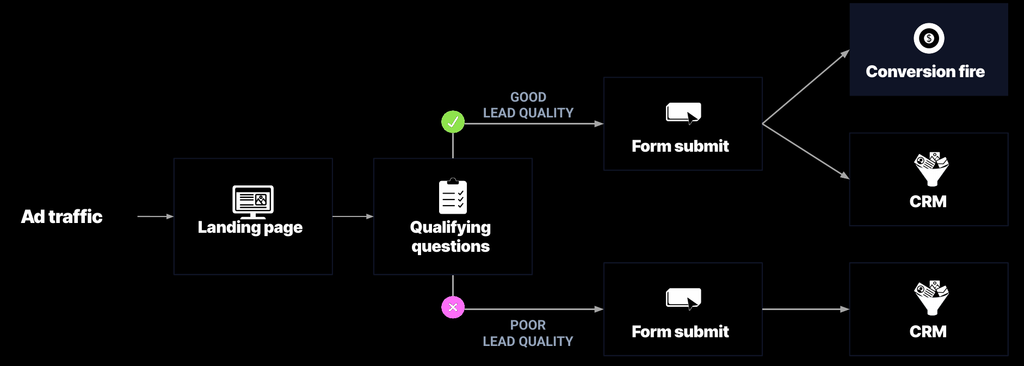
Example qualifiers
Examples include:
- assets under management
- proximity to retirement
- whether real estate counts as investable assets
It can also include SDRs and post-call follow-up to confirm qualification and protect advisor time.
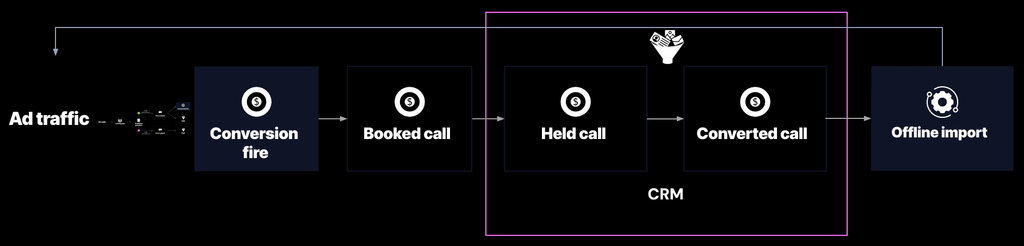
2) Teach the algorithms with your first-party data
A media strategy optimized for AI answer engines uses first-party CRM data to train ad platforms on the right outcome. Josh and Angele’s roadmap keeps the goal clear: optimize for clients, not just leads.
Why this matters
If your business wants paying clients, your ad platform needs to learn what a client looks like. That specificity creates a more effective feedback loop and lets you bid more aggressively on high-value prospects.
Predictive models from customer data
Predictive models built from real customer data can take the last two years of client data to create a profile of the ideal individual.
When a new lead enters from a platform, the model compares that lead to the ideal profile and assigns a score:
- high score for strong fit
- lower score for weak fit
- possibly a negative score for a very poor fit
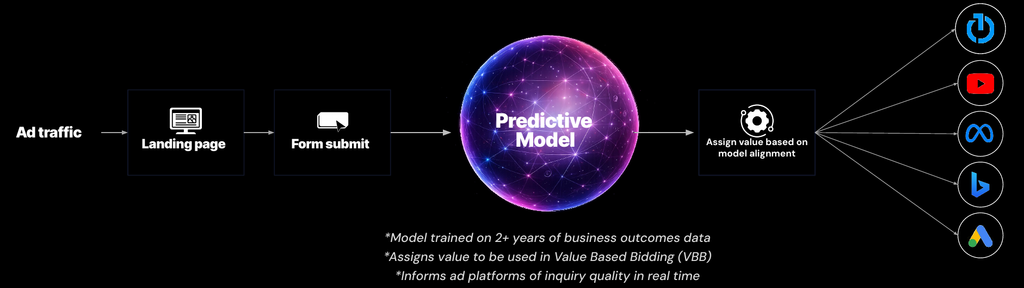
That score then supports:
- value-based bidding
- conversion value optimization
- cross-platform use across Meta, Google, Trade Desk, YouTube, and more
Real-time value signals
Level.Signal, Level’s predictive lead and value model, combines CRM records, third-party data, and on-site behavior to score each lead the moment someone submits a form. That score goes straight to the ad platform, so it learns which leads matter without waiting days for a booked call or a closed sale.
That shorter loop gives your platform better guidance and helps you act in real time.
3) Show up in AI answer engines, not just Google rankings
Being number one on Google no longer defines organic success. AI changes discovery.
When someone asks an LLM for the best wealth advisor, ChatGPT or Claude give them a shortlist. If your brand isn’t on it, your prospective buyers don’t even know you exist.

How AI systems surface answers
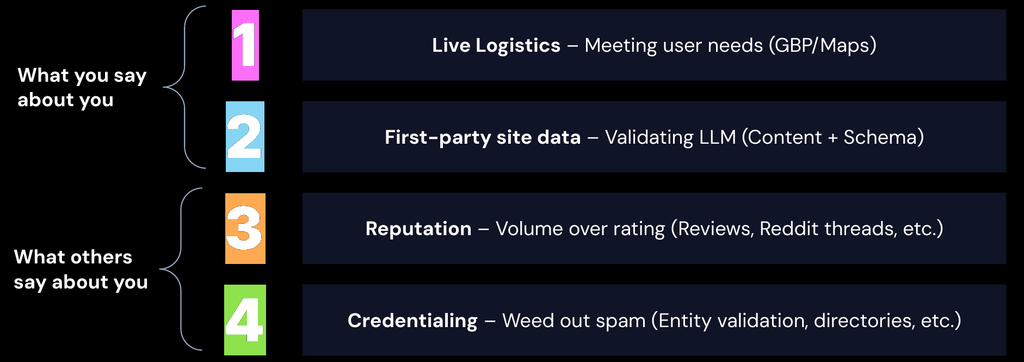
AI systems look at two broad areas, and they cross-check four categories of evidence within them.
What your brand says about itself
They review:
- the brand’s website and its structured data (schema)
- owned properties
- business information like location, service area, hours, and phone number, often pulled from Google Business Profile and Maps
They also check whether the details match across the brand’s properties.
What others say about your brand
They also review third-party and user-generated sources such as:
- Trustpilot
- Nextdoor
- Wikipedia
For reviews, volume carries more weight than a high star rating from a handful of reviewers. In regulated industries, AI tools also check public directories and certifications, which helps them screen out spam and lead-gen sites.
The more these sources align, the more likely the brand appears in the shortlist.
4) AI reads your brand’s reputation, so curate what it finds
Brand presence can be viewed in four ways:
- positive and present
- neutral and present
- negative because absent
- negative because present with negative sentiment
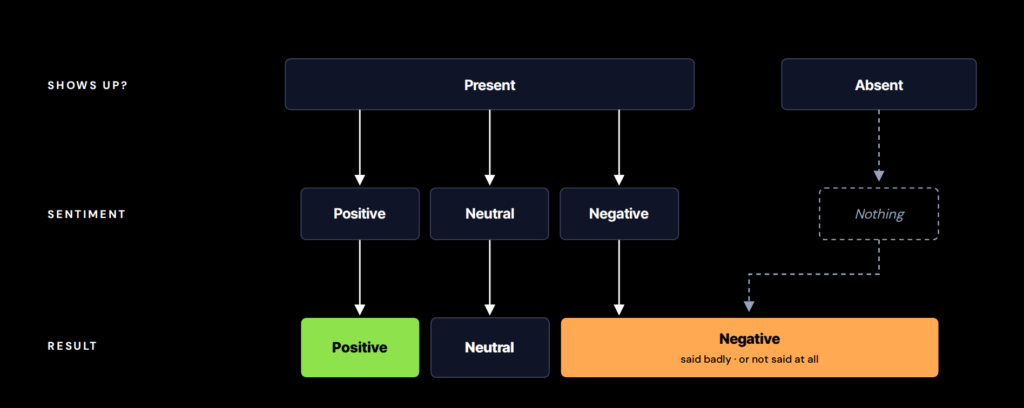
That structure helps teams decide where to act.
If your brand doesn’t show up where your competitors do, publish content to address the gap. If your brand appears with negative sentiment, that creates a harder challenge. Some negative discussions, such as on Reddit, may not benefit from direct argument. Instead, teams can use those topics to guide their own publishing schedule and create content to remedy the negative sentiment.
5) AI can mine your CRM, so treat it as a revenue source
Your CRM no longer sits at the edge of the marketing stack. It’s now an untapped revenue source.
CRM goals include:
- retention
- reactivation of lapsed clients
- cross-sell
- referrals and rewards
- loyalty
- lifetime value growth
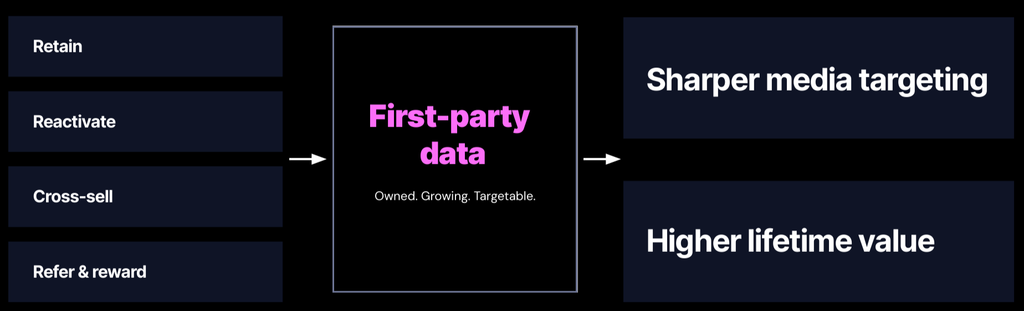
This is where Josh and Angele’s roadmap connects CRM activity back to media performance. Your CRM data is what a predictive model learns from. Every client you retain, reactivate, or win through a referral sharpens its picture of an ideal client, so targeting improves over time. If you don’t have a model yet, a clean, current CRM is the first step toward building one.
Email and loyalty marketing also gain new importance because it’s easier to keep clients than to acquire new ones.
6) AI blurs attribution, so measure incrementality and mix
Measurement can’t stop at “did Google work” or “did Meta work” anymore. That still matters, but it doesn’t tell the whole story.
There are two important questions you should be asking your data:
- What happens when you add budget to one channel, like CTV or paid social?
- How does that change performance in another channel?
The answers to these questions will identify your need for incrementality analysis and mixed-media measurement alongside direct attribution. When an organization uses search, social, programmatic, and CTV, it can evaluate how channels work together and then use that insight for future planning and recalibration. That view shows which channels drive results, so you can plan budget with confidence.
Run your media, search, and CRM as one system
These six shifts all point to the approach Level’s Josh Muskin and MDRN Capital CMO Angele Fox outlined at DMFS: run media, organic visibility, and CRM as one system.
Qualified leads and first-party data teach ad platforms what a real client looks like, consistent brand signals keep financial services brands on the AI shortlist, and the CRM turns existing clients into revenue and better data for the next campaign.
If you’d like a second set of eyes on your own setup, book a strategy call with Level. We’ll start with your data: what your ad platforms are optimizing for, where your brand shows up in AI answers, and what your CRM could feed back into media.