Full disclosure: this interview didn’t start on time. Brad Stephenson, Level’s SVP of Marketing and Sales Enablement, was wrapping up a story about seeing Kesha perform at what turned out to be a high school auditorium in Cleveland. Brad’s take: she’s more talented than people give her credit for, and “Praying” is genuinely great.
Carly Fridhandler, AVP of Creative at Level, had some thoughts about that. We’ll get to those at the end.
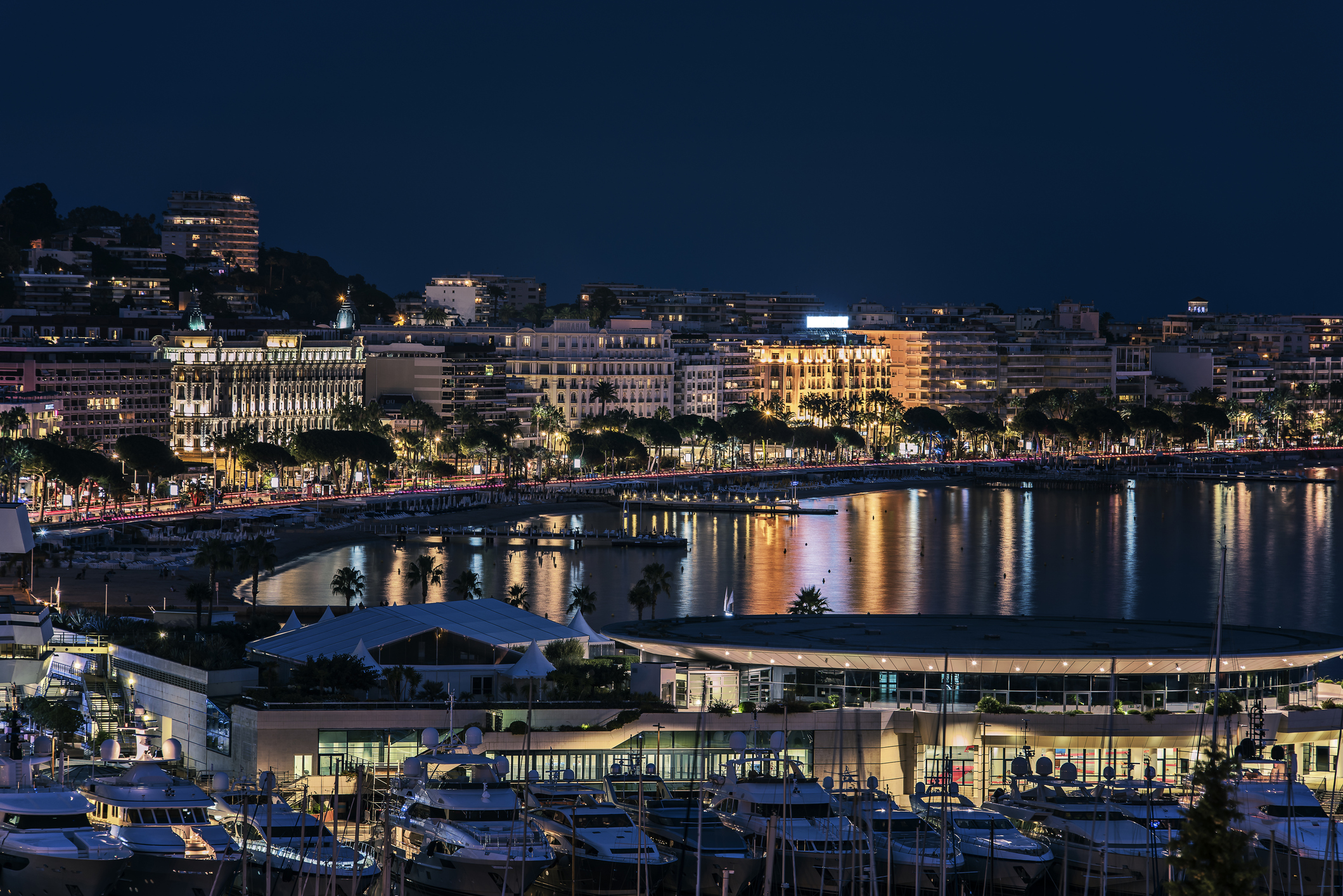
What followed, once the interview actually started, was a deep chat about where creative is right now. Brad and Carly were joined by Brook Johnston, another of Level’s creative AVPs. With Level heading to Cannes Lions 2026 this week, we wanted to know what they’re actually seeing, thinking, and expecting from the next 12 months.
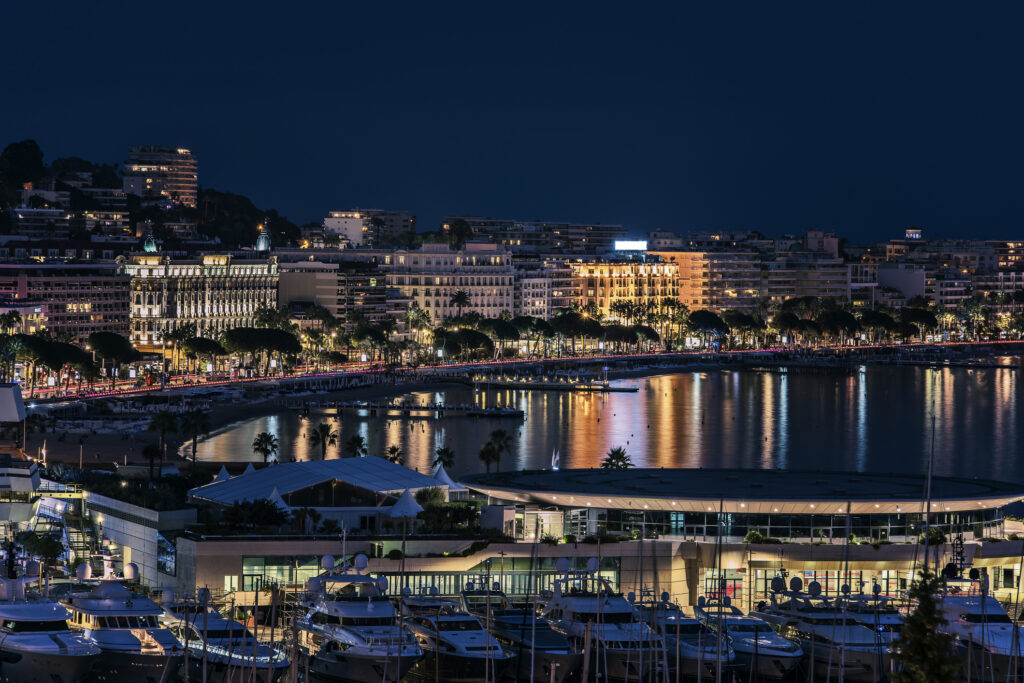
Our Cannes Lions 2026 Interview
Brad Stephenson: Level Agency is headed to Cannes Lions 2026. If you had to give an honest headline for the state of creative right now, what would it be?
Brook Johnston: An existential crisis.
Carly Fridhandler: I’d say it’s being completely redefined. We’re not at the introduction of AI anymore. We’re further down the line, and because it has so substantially changed the way people view creative, traditional art, advertising, how we produce ads — I think the defining headline is that creative is being fundamentally redefined. But that might be too simplistic. Brook?
Brook: I think it’s being radically redefined within our industry. The way we think about creative, the way we use data to get there, the new tools available to bring things to life. But at the same time, the state of creative is radically unchanged for the actual people we’re creating it for. It’s the same things people like: powerful stories, a reason to smile, a moment worth remembering. That is the same as it’s ever been. And I think sometimes we lose sight of that.
Brad: What’s the most significant shift in your own work over the past 12 months?
Brook: There’s an obvious evolution in the volume of production and the way we test work. Ten years ago, you’d spend six months meticulously crafting one 30-second spot. Today, we’re expected to test dozens, sometimes hundreds, of concepts in a single deployment batch. It’s a radically different approach. And with that, it’s changed how we need to think about the work. As much as we’d love to spend six months on one ad, that’s not the environment anymore.
We’re trying a lot of different things a lot faster, and seeing what works rather than putting all our eggs in one basket. The shift has been accelerated by the way algorithms like Meta’s have changed, and the importance of visual and conceptual variety as a performance lever. Educating clients on that has been a big part of my year. A lot of traditional clients still want everything to feel like it belongs to one perfectly cohesive idea, when the modern reality is that you should be testing 5, 10, 15 loosely connected ideas. Pushing those boundaries is worth it.
Carly: The big shift for me is a more critical view on the process of getting to the end result. Like Brook said, the efficiency of getting there has changed. Now there’s more of an expectation about how much data is pulled in, what your prompting process looks like, how you got where you got. I’ve seen a real shift toward performance focus because the data is so much more readily available. That’s the biggest change I’ve felt in the past 12 months.
Brad: There are two versions of the AI story: creative gets faster and cheaper, or everything starts to look the same. Which version feels most true right now?
Carly: I could talk about this one for a long time. It depends on the client and the account, but I do see a lot of sameness when teams go full AI adoption without critical pressure testing or quality thinking. My view has always been that AI should be a tool to optimize and streamline while still achieving the highest quality result, one that doesn’t let people see it was made by AI. The AI aesthetic is fully real now.
The majority of the population knows what it looks like. And the legal environment is shifting fast. New York just passed a law requiring a disclaimer when AI is used on human imagery in advertising, similar to a cigarette pack warning. We have to think critically about how that affects performance.
We actually had a client post a stock image of a real person on social media, and the comments immediately said the brand was using AI. Even real imagery, if it’s too polished or gives off those cues, gets flagged now. Being smart about what those markers are matters.
Brook: There are some genuinely cool practical applications. Anything in the world of 3D, mascots, CGI-adjacent work, especially for CPG brands, the ability to use AI to create polished brand characters and assets is incredible. But with human imagery, there’s still a real gap between what organizations are excited about and what people actually trust.
There are entire Reddit communities dedicated to identifying and shaming AI-generated content in commercial applications. We have to find the balance between what helps our teams create good work and what people will actually respond to. I haven’t seen a fully AI-generated concept yet that resonated the way Old Spice did. The work that has defined this industry for 50 years was very, very human.
Carly: I’ll agree on the mascot and non-human use cases. When something is immediately cued as not real, a 3D character, a stylized product environment, the results we can get now are amazing. But human imagery in static or video? That’s dangerous territory.
Brad: What is one of the most interesting applications of AI you’ve found?
Brook: One of the most useful applications for our creative team lately has nothing to do with production. It’s about intake. It’s the strategy, the understanding of the brief. Show me a creative and I’ll show you someone who is constantly complaining about briefs not being perfect. That’s everybody in this industry, for all of time.
But now you have the ability to take an incomplete brief, analyze it, and build foundational thought starters and a real understanding of the audience, especially on complex subject matter, very quickly and to a high degree of quality. That’s been a cool transformation. It might not show up in the final banner ad, but in how the team understood the project from day one.
Carly: Storyboarding is the one I keep coming back to. When we’re trying to get an idea over the line with a client, a lot of clients are visual people, and it’s very hard to mock up every frame of a video concept manually. Now we can bring it to near-full realism before a shoot is ever scheduled. That accuracy is invaluable, and it’s a recent development. A year ago we couldn’t do it.
Brad: Greg Quentin, CCO at Design Bridge and Partners and this year’s Design jury president at Cannes Lions, has said the role of the human designer feels more prominent than ever in a world of AI. How do you respond to that?
Brook: As professional creatives, you are paid more than anything for taste. You’re being hired because you have an opinion on what’s going to resonate with people, because you can land on human truths, tensions, and moments of meaning that come from lived experience. That’s something that is going to be the hardest function to replace compared to any other discipline.
We talk about media and analytics as number-based roles, and there’s real evolution happening there too. But it’s far harder to automate the judgment required to interpret six rounds of client feedback on a website landing page, to hold all the stakeholders and all the unwritten rules in your head and make something good from it. That’s a very human skill set, and it’s what defines the best creatives. Claude and all his friends are getting better at it, but there’s a missing link that comes from years of experience and actual human connection.
Carly: My first instinct was the same: taste. No matter how many connectors I build, how many custom skills I create, how much client feedback history I feed in, AI is not going to replace that side of the job. On the replacement side, yes, there are things that are genuinely well-served by these tools. Infographic work, retouching, resizing, quick mocks. Things that used to take a traditional designer hours now happen in minutes. That’s real and it’s good. But the taste and judgment side? I agree with Brook completely.
Brad: What makes events like Cannes Lions worth paying attention to beyond the parties in the south of France?
Carly: The standard needs to be set somewhere, and Cannes Lions does that. Creatives need to be able to look to higher places for inspiration, especially right now, when so much is being redefined and the tools are changing this fast. Having an aspirational standard while everything underneath it is in motion matters.
Brook:What inspires me about Cannes Lions is that it’s still a celebration of ideas. Our industry right now is obsessed with the tools we use to get ideas. The automations, the efficiencies. That’s not what gets celebrated at a festival like Cannes Lions. It’s about the work, and that’s always going to be the north star, whether you used AI or Photoshop or a napkin sketch. We’re celebrating ideas. That never changes.
We do have work entered this year, actually, our campaign for Vessel in New York City. It’s a cool piece of the city’s culture, a real landmark, and being able to have some impact there is something the team is proud of.
Brad: Predictions for creative over the next 12 months?
Carly: We’re going to be nostalgia-heavy. As everything continues to feel futuristic, companies are going to lean hard into emotional storytelling at a level they haven’t before, and nostalgia is the primary avenue in. We’re going to see a lot of callbacks to our collective childhoods. And it’s not just about targeting Gen Z. It’s the Vine era, early YouTube, the early 2000s moment before everything got high-production and algorithmic. Things being more pared down, more lo-fi in the original sense of the word, hitting those pre-AI nostalgic moments.
Think about what Dove did in the early 2000s when heavy Photoshop retouching was everywhere on fashion models. They pushed back by pledging to never retouch images, and it became a brand identity. I see a similar thing happening now with AI. Companies are pledging to not use it, and it’s actually trendier right now to say you don’t use AI than to say you do. Dove is doing it again. They’ve pledged no AI in anything they make. Whether that holds in every internal process, who knows, but the badge of honor around going back to natural, real, unmanipulated creative is real and it’s growing.
Brad: Artisanal advertising.
Carly: Exactly.
Brook: High volume, though. Not small batch.
Brad: Last question: What is a brand you admire from a creative perspective you think people should pay attention to?
Brook: My pick is Zevia, the soda brand. They’re a perfect example of exactly what Carly just described. After Coca-Cola’s fully AI-generated holiday commercial got significant backlash last year, Zevia used that moment. As the zero-artificial-ingredient soda, they turned it into a whole brand statement around being proud to be natural and real. That’s exactly what their brand stands for. It was a perfect use of a competitor’s stumble.
Carly: For me it’s Spotify. They’re doing something interesting, which is finding a real balance between using everything that’s available to them and still making it feel human. Spotify Wrapped is built entirely on AI, and yet it feels personal, design-forward, and nostalgic all at once. I like how they’re evolving as a brand while still making the output feel like it was made for you specifically.
Brad: Even if there’s a lot of Kesha in my Spotify playlist.
Carly: Even if there’s Kesha in there. The fact that it feels like it’s meant for you is exactly the point.
Brad: She dropped the dollar sign in her name, by the way. That’s how you know she’s matured as an artist.
Carly: Okay, fine. Send me a couple tracks. I’ll go in with an open mind.
Brad: Done.